Metered pricing models
A metered price binds a meter to a per-unit rate. As events are ingested and aggregated, the meter’s total is multiplied by that rate to produce the charge.Unit pricing
Unit pricing charges the same amount for each unit, no matter how many are consumed. It’s the right default for token billing, API calls, and most AI-agent metering, where you want a predictable rate card. Say you’re billing an LLM feature and meter prompt and completion tokens separately:
A customer who consumes 1,000
prompt-tokens and 400 completion-tokens in a period is charged (1,000 × $0.10) + (400 × $0.18) = $172.00 for usage — before tax, which Macropay adds and remits on your behalf.
Volume pricing (coming soon)
Volume pricing lets the unit rate step down (or up) as a customer’s total volume crosses thresholds — for example, a lower per-token rate after the first million tokens. This model is on the roadmap and not yet available.Adding a metered price
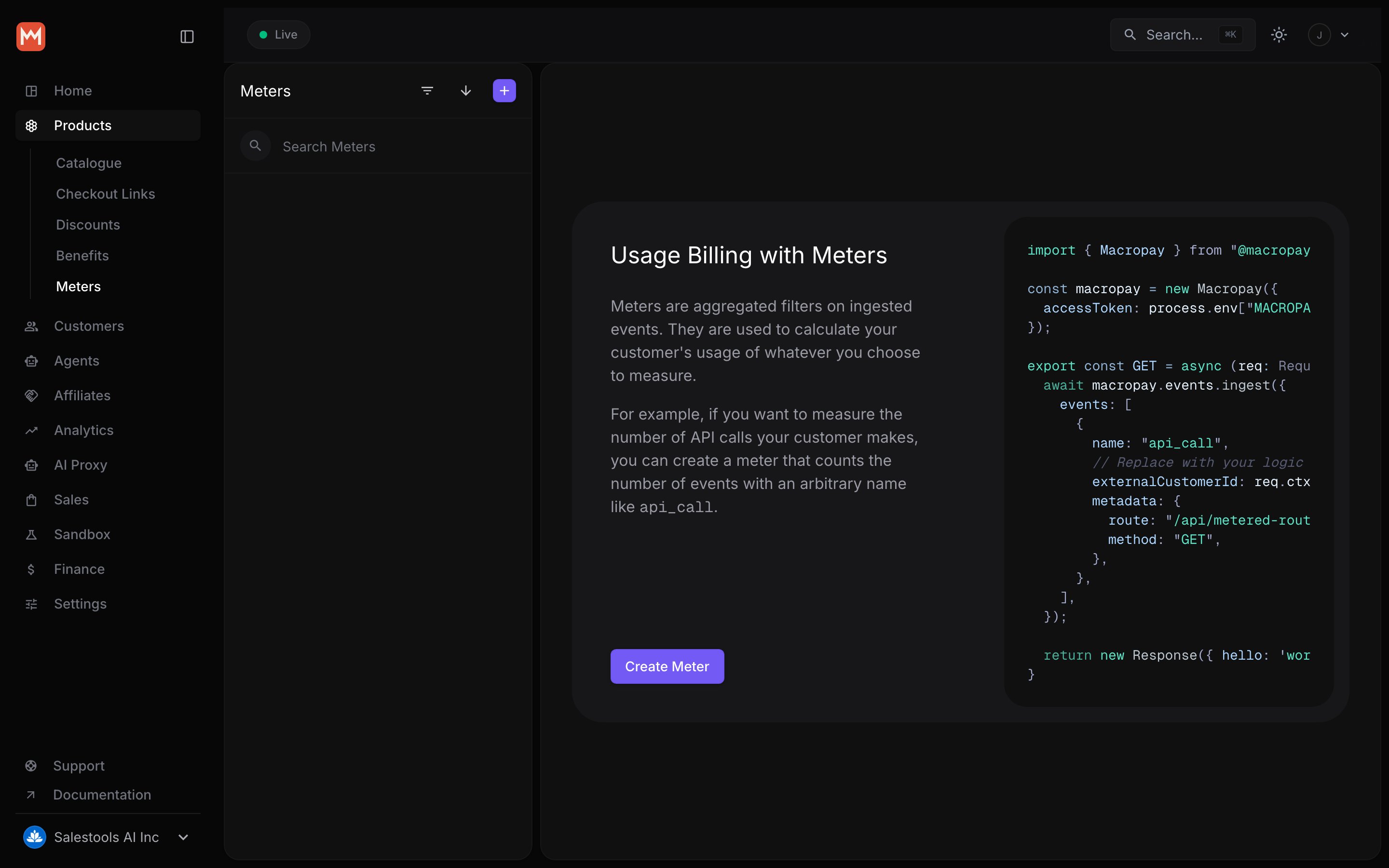
Metered prices attach to subscription products. To start charging for usage, add one to your product, selecting the meter to bill against and the amount per unit.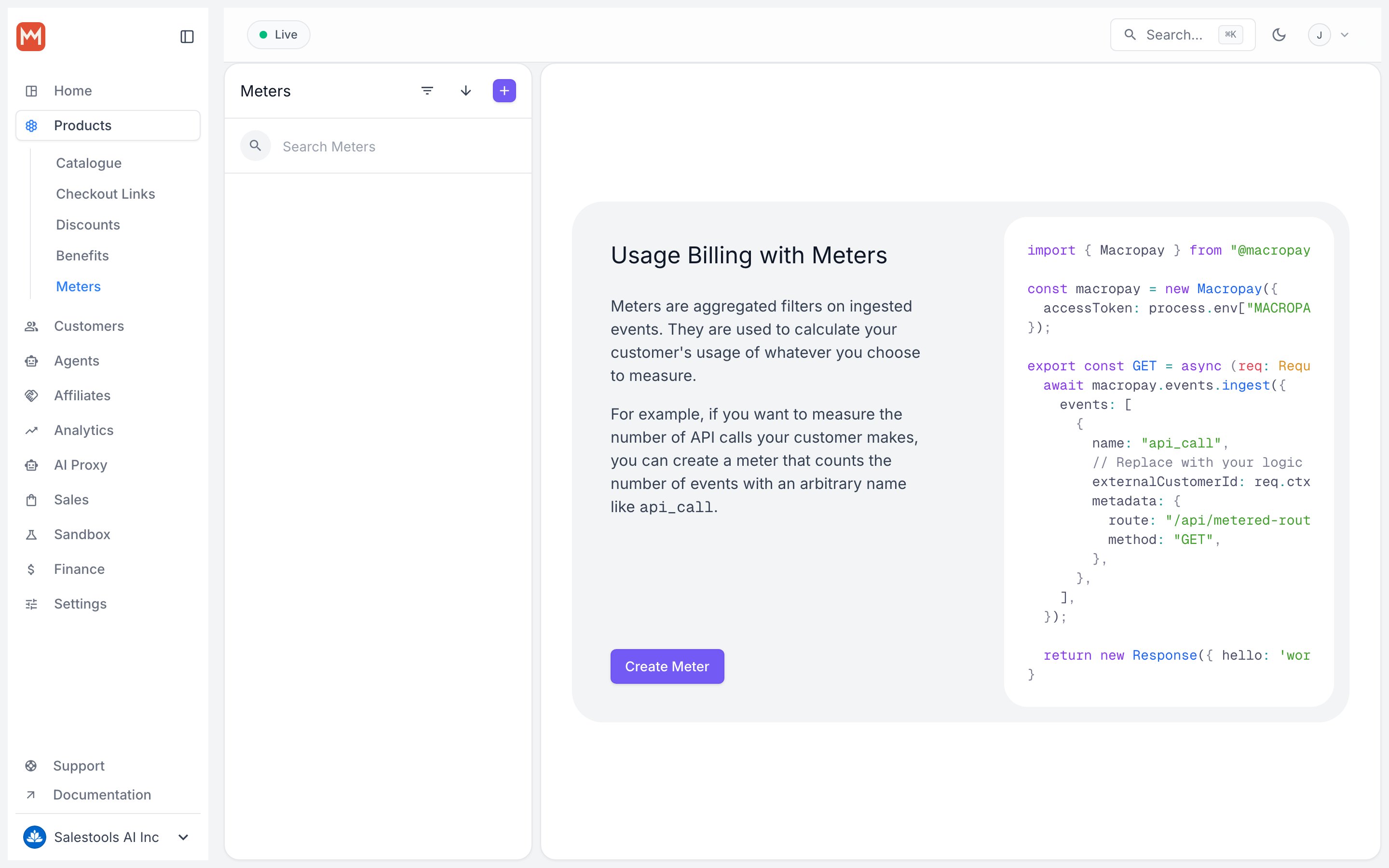
Pairing metered prices with prepaid
credits is a common pattern: grant
credits up front, draw them down against usage, then bill the overage.
When usage is invoiced
Usage-based charges ride along with the subscription’s billing cycle. Usage accumulates over the period and is settled on the same invoice as the rest of the subscription.- Monthly billing
- Yearly billing
Usage is aggregated across the month and invoiced at the end of the billing
period, together with any recurring subscription fees.
Cancellations and the grace period
Cancelling a subscription doesn’t drop accrued usage charges. The subscription stays active through the end of the current billing period — the grace period — and usage continues to be tracked the whole time. At the end of that period, a final invoice settles the consumed usage, even though the subscription won’t renew. Nothing billable is lost on the way out.What customers see
Customers track their running usage and estimated charges per meter from the customer portal, so there are no surprises at invoice time.